
Types of Waste
Waste Types
Explained

Residential Junk
What counts as household junk:
Light, everyday junk and items from homes, apartments, garages and storage areas. These items are generally bulky but not heavy or small knick knacks from around the home.
Common examples include:
Furniture, lounges, mattresses (extra charge), toys, clothes, packaging, cardboard, small appliances, whitegoods, TVs, electronics, rugs, general household items and green waste without soil.
Best for:
Spring cleans, deceased estates, relocation leftovers, end-of-lease clean-ups, garage clear-outs, apartment clean-outs and general rubbish removal.
Household junk loads are lightweight, easy to handle and cost-effective to dispose of.
For this type of waste choose a residential household skip bin

Business Waste
What counts as business waste:
General junk and unwanted items produced by offices, shops, hospitality venues and commercial workspaces. These items are not demolition waste.
Common examples include:
Office chairs, desks, shelving, filing cabinets, reception furniture, computers, monitors, printers, general equipment, displays, signage, packaging waste, storage materials, sample boards, promotional stock and retail fittings.
Best for:
Office clean-outs, shop refreshes, hospitality upgrades, warehouse tidy-ups, storage unit clear-outs, relocations and end-of-lease clean-ups.
Business waste is usually bulky but manageable, and fits within standard household/business waste pricing.
For this type of waste choose business waste skip bins
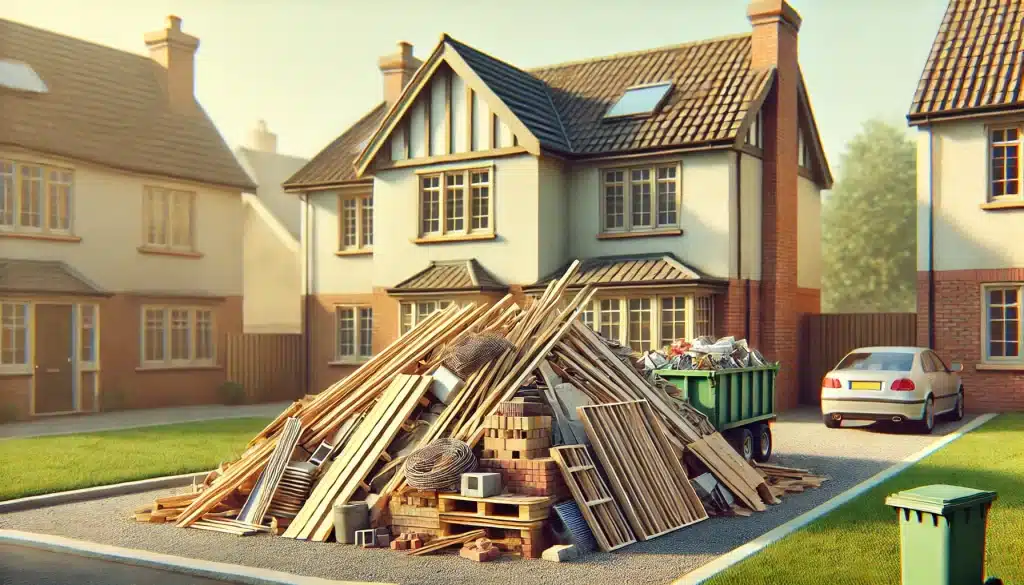
Trade Waste
What counts as trade waste:
Building and renovation materials from light construction work. These materials are heavier than household or business waste.
Common examples include:
Plasterboard/gyprock, timber off-cuts, framing, metal, carpet, flooring, doors, packaging, pallets, site plastics, joinery, fixtures and light demolition waste.
Heavy demolition waste
These materials are very dense and reach weight limits quickly.
Includes:
Bricks, concrete, tiles, rubble, render, sand, soil, cement, masonry, pavers.
Best for:
Renovations, small strip-outs, fit-outs, commercial refurbishments and new-build clean-ups.
For this type of waste choose the construction waste skip bin:

Masonry Rubble
What is masonry and rubble
Masonry waste is extremely dense material such as bricks, concrete, tiles, rubble, render, sand, soil, cement and pavers. These materials reach the legal 1500 kg towing limit very quickly, even when the trailer looks only partially full. Because of this, all masonry loads must follow strict safe-loading limits.
Safe loading rules:
Masonry waste must be booked into a 4m³ trailer skip only.
Maximum load is roughly 2 cubic metres or under 1500 kg.
Mixing masonry into 5m³ or 6m³ skips is not permitted as these bins cannot carry the weight safely.
Heavy demolition waste should be kept to a maximum of 15 wheelbarrow loads (approx. 1500 kg total).
Best for:
Small, dense demolition tasks such as:
Remedial or repair work, brick wall removal, bathroom tile removal, lifting small concrete slabs, and minor renovations that produce compact but heavy debris.
These projects generate low-volume, high-weight material, which is why the 4m³ trailer skip is the only safe and compliant option.
For this type of waste choose the construction waste skip bin
We'll Take It!
Household Junk, Green Waste and Business Waste
General Household Items
A typical household features furniture and appliances such as sofas, couches, chairs, tables, beds, wardrobes, dressers, coffee tables, dining sets, refrigerators, ovens, microwaves, toasters, blenders, dishwashers, washing machines, dryers, air conditioners, heaters, and vacuum cleaners
White Goods and Appliances
White goods and appliances include refrigerators, freezers, washing machines, dryers, dishwashers, ovens, stoves, microwaves, air conditioners, heaters, water heaters, vacuum cleaners, toasters, blenders, coffee makers, kettles, food processors, mixers, irons, and electric grills.
Business and Office
Business and office items include computers, laptops, monitors, keyboards, printers, scanners, copiers, desks, chairs, filing cabinets, bookshelves, conference tables, whiteboards, projectors, shredders, office supplies like pens, paper, staplers, packaging materials, pallets, storage boxes, and other equipment.
Green Waste
A collection of tree trimmings, fallen leaves, grass clippings, branches, hedge clippings, weeds, garden debris, compostable plant residues, mulch materials and other organic plant materials.
Individually Charged Items
The following items are accepted; however, they are charged individually: mattresses of all sizes and types, tyres of all sizes, gas bottles and paint tins.
Trade, Building and Construction Waste
Trade Waste
Light renovation and trade waste such as timber offcuts, packaging waste, cardboard, pallets, plasterboard, carpet, gyprock scraps, empty paint containers, plastic sheeting, electrical wiring, insulation material.
Masonry
Masonry materials include bricks, concrete, blocks, natural stones such as granite, mortar, pavers, tiles and bedding and render.
Can't Take It!
Asbestos
We cannot accept asbestos in our skip bins (additional fees and charges apply). However, we do have asbestos-exclusive bins available for safe disposal.
Food Waste
We do not accept food waste, including fruit and vegetable scraps, meat, dairy products, leftover meals, baked goods, and pantry and packaged items.
Hazardous Waste
Items like faecal matter, deceased animals, medical waste, dangerous or flammable chemicals, and hazardous waste must not be disposed of in our dumpsters.
Compressed Air Canisters
Fire extinguishers, gas bottles, helium gas bottles, air compressors, CO₂ cartridges, oxygen cylinders, acetylene tanks, welding gas cylinders.
All Types of Batteries
Car battery, lithium tool batteries, laptops, mobile phones and devices.